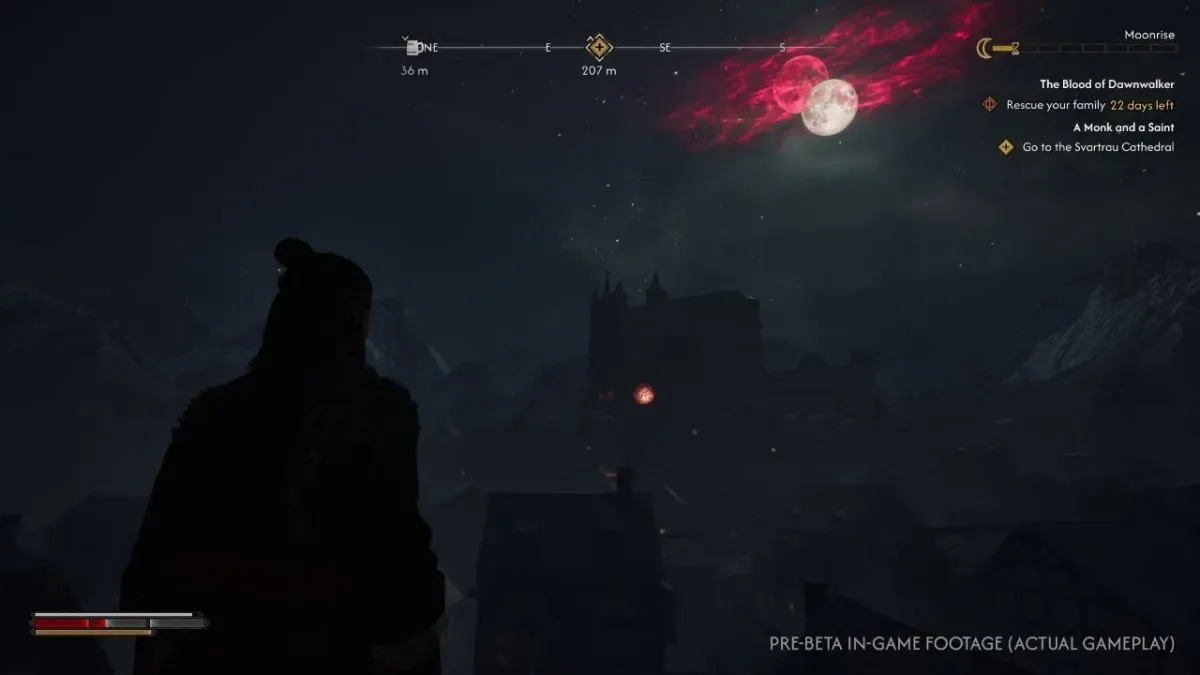
One character, two forms
The transformation is central to Coen’s story. His human and vampire forms offer different ways to confront obstacles. The official gameplay reveal demonstrates this through combat and movement rather than treating night as a purely visual change.
Human in daylight
Coen’s daytime approach centers on his sword and witchcraft. The human form makes those tools the starting point for understanding combat and finding a way through an encounter.
Vampire after dark
At night, Coen gains vampiric powers and claw-based combat. The official reveal shows abilities such as Shadowstep and Clawride creating additional ways to cross obstacles and climb through the environment.
Combat changes with your form
Fextralife groups Coen’s skills into Swordmastery, Witchcraft and Vampirism. The three trees organize sword techniques, witchcraft and vampiric abilities.
The broad contrast is swordplay and witchcraft in the human form versus the added vampire toolkit at night. Swordmastery is also available at night, according to Fextralife’s new-player guidance.
Night opens different routes
The official reveal uses vampire traversal to demonstrate an alternative approach to a location. Clawride and Shadowstep are named examples. The practical point is that a route available to Coen’s vampire form may differ from his daytime approach.
For geographic context, start with the Vale Sangora reference.
Does simply waiting at the keyboard change the phase?
The narrative clock is not driven by ordinary real-world elapsed time. The 30-day clock guide explains the distinction between exploring or fighting and selecting an action marked with an hourglass. Consult the displayed time cost before a consequential choice.
Prepare for the next phase
Use the combat resource comparison to separate stamina from Activation Charges. The skills guide explains learning and loadouts, while Blood Hunger covers the feeding risks of nighttime encounters.